Low Interest Personal Loan: How to Find, Qualify For, and Get the Best Rate
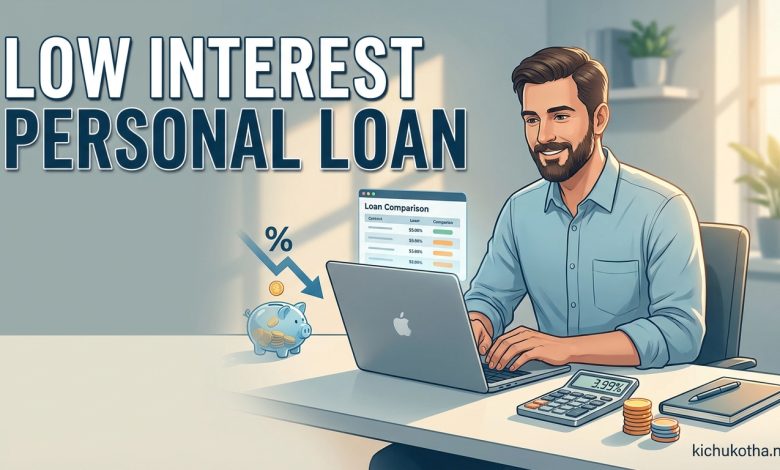
Low Interest Personal Loan: Let’s admit it nobody loves borrowing money. Sometimes life throws a medical bill or a home repair our way. Maybe we need to consolidate several high-interest balances into one simple payment. When that happens the interest rate we agree to can be the difference between a loan that helps and one that quietly bleeds us dry for a decade A personal loan with a low interest rate is well worth the time to track down. Even a two or three percent difference adds up to hundreds or thousands of dollars over the lifespan of a loan. In this guide we’ll share what defines a low interest personal loan who qualifies for one how you can get the best rate and the traps to watch out for. We’ll also show you how much you could save with a personal loan that has a below-average interest rate.
What Is a Low Interest Personal Loan?
A personal loan is money you borrow from a bank credit union or online lender that you repay in monthly instalments over a period of one to seven years. Most personal loans are unsecured meaning you don’t need to secure the loan by putting up collateral like your car. A low interest personal loan is simply one that commands a rate far below the average for most borrowers. There’s no official definition since rates tend to shift with the winds of central-bank policy inflation and local conditions. A rate that’s far below the average for one country or year may be average for another.
A personal loan with a low interest rate is an unsecured instalment loan with an annual percentage rate (APR) that’s significantly below the national average for your country typically offered to borrowers with strong credit and stable income. A good rule of thumb is to look for something well below the average personal loan rate published by your central bank a major comparison site or a regulator. That way you know you’re not being taken advantage of.
Read Also:
- How Much Is Renters Insurance in California? (2026 Cost Guide)
- Affordable Auto Insurance in Texas: How to Pay Less Without Cutting Corners
Interest rate vs. APR: why it matters
The interest rate is the cost of borrowing the money. The APR (annual percentage rate) is the interest rate plus other fees such as origination charges processing costs and sometimes insurance. Always compare APRs because fees can add significantly to the amount you borrow making the loan unexpectedly expensive.
How Much Can a Low Interest Personal Loan Save You?
Let’s look at some figures to put that 20% example in perspective. Assume you borrow 10 000 (in your local currency) over the course of three years:
- At 8% APR you’ll pay 313 per month and a total of 1 270 in interest
- At 15% APR you’ll pay 347 per month and a total of 2 490 in interest
- At 24% APR you’ll pay 392 per month and a total of 4 110 in interest
Moving from a 24% APR to an 8% APR would save you nearly 2 900 on this example loan. That’s extra cash you can squirrel away into savings for emergencies or a rainy-day fund. This is the kind of situation where you want to shop around for a low interest personal loan before you accept the first offer that comes your way.
Who Qualifies for the Lowest Personal Loan Rates?
Lenders reserve their lowest rates for borrowers who are the least amount of risk. Here’s what they typically look at:
Credit score and credit history
Your credit score and history are usually the biggest factors. Borrowers with good to excellent scores get the lowest rates while anyone with limited or damaged credit pays far more. Scoring varies by country but the basic principles remain the same: you want to demonstrate a responsible borrowing history over a long period of time.
Income and employment status
Lenders want to see that you have a steady income to ensure you can make monthly payments. Employed borrowers typically have the easiest time qualifying and the best chance at securing a low rate. Some lenders may want to see your payslips or tax returns as proof of income. Self-employed applicants have to apply as well but may be asked to provide additional documentation such as bank statements for the past 12 to 24 months.
Debt-to-income ratio
This compares your monthly debt payments to your monthly income. Many lenders like to see a ratio below about 36% to 40% but it can vary significantly depending on the lender. The lower the ratio the more room you have to make payments on other debts including your personal loan.
Loan amount and term
Shorter-term loans tend to have lower rates because the money is with you for a shorter amount of time. The shorter the term the bigger your monthly payment will be so only take on a personal loan you can afford to repay every month. Larger loan amounts also tend to carry slightly higher interest rates so always borrow only what you need.
Relationship with the lender
Some banks and credit unions offer discounts to long-standing customers. If you have a regular account with a financial institution ask if they offer a relationship discount on personal loans.
Where to Find a Low Interest Personal Loan
Not all lenders price loans the same way. The more you spread your search out the better your chances of finding a genuinely low interest rate lender.
Credit unions and other cooperative banks
Many credit unions offer lower interest rates and fewer fees due to their not-for-profit status. Credit unions also have rates regulated from time to time by government agencies. If you’re eligible to open an account with one of these cooperative banks it can be a good place to start.
Traditional banks
Big banks can offer competitive rates especially if you already bank with them and have an excellent credit history. You may also get a discount in exchange for automatic bill payments from your account.
Online lenders and fintech firms
Online lenders typically operate with lower overhead costs allowing them to slash rates. Many online lenders also let you soft-check your rate (a type of trial run that doesn’t impact your credit score) before applying. Make sure the site you’re using is legitimate in your country and regulates its lenders.
Peer-to-peer lending platforms
P2P lenders match borrowers with individual investors. Rates can be competitive but always check the fine print for fees.
Secured loans as an alternative
If you have mediocre credit a secured loan backed by savings a car or another valuable asset may have a lower rate than an unsecured loan. Just remember that if you default on payments the lender can take your collateral.
How to Get a Low Interest Personal Loan: Step by Step
Here’s a simplified process that can help you get the lowest rate possible whether you’re borrowing for the first time or the fifth.
Step 1: Check your credit report
Request a free or low-cost copy of your credit report and comb it for errors. Getting disputes resolved can improve your score in as little as 30 days.
Step 2: Decide exactly how much you need
Write it down! Getting too little financing means you may have to reapply later and pay additional fees. Getting too much financing means you’ll pay extra in interest.
Step 3: Pre-qualify with several lenders
Most online lenders (and some banks) let you see what rates you might qualify for based on a soft credit check. Shoot for at least three to five loan offers. Comparing offers is the best way to find a low interest personal loan because lenders price risk differently
Step 4: Compare APRs fees and terms side by side
Put together a simple spreadsheet that compares the APR monthly payment total repayment amount origination fee and prepayment penalties for each offer. The cheapest loan isn’t always the cheapest when it comes to monthly payments. A longer-term loan may drop your monthly payment but increase the amount of interest you pay overall.
Step 5: Negotiate or ask for a better offer
If one lender gives you a better offer than another share it with the others. Some will match or beat your rate simply to get your business especially if you already bank with them.
Step 6: Read the fine print before you sign
Make sure you fully understand origination fees late-payment charges prepayment penalties and whether the rate is fixed or variable.
Smart Ways to Lower Your Interest Rate
If the offers you’re getting aren’t as attractive as you’d like there are other steps you can take.
Boost your credit score before applying
Paying down balances making payments on time and avoiding new lines of credit can improve your score and qualify you for better offers.
Add a co-signer or co-borrower
Ask a friend or family member with excellent credit to apply with you or take over the loan after you’ve made payments for a certain amount of time.
Consider a shorter loan term
Some lenders offer better rates for shorter terms so you could save on interest by repaying the loan sooner.
Set up autopay
Many lenders offer a small discount if you set up automatic bill payments from your bank account.
Time your application wisely
Don’t apply for a loan while you’re rushing to solve an emergency. Postpone your application until your credit improves or you get a raise.
Common Mistakes When Choosing a Low Interest Personal Loan
A low interest rate can look appealing even if it’s not the best option for your situation. Avoid these common traps.
Ignoring fees
Origination fees (also known as loan fees) can range from 1% to 8% or more and either reduce the amount of cash you receive or increase the amount you repay.
Focusing only on the monthly payment
A longer-term loan has a lower monthly payment but increases the amount of interest you pay over the course of the loan.
Applying everywhere at once
Applying to multiple lenders at the same time can hurt your credit score especially if the application requires a hard inquiry (formal credit check).
Getting taken advantage of
Legitimate lenders won’t promise approval without reviewing your application. Beware of anyone asking for a fee up front.
Missing the prepayment terms
If you plan on repaying your loan early make sure the terms don’t include a prepayment penalty.
Taking out a loan for the wrong reason
Personal loans are a smart way to consolidate credit card debt or pay for home or car repairs. They’re less useful for impulse purchases.

Is a Low Interest Personal Loan Right for You?
A low interest personal loan is a smart way to finance almost any major purchase or consolidate debt so long as you have a plan to repay the loan. Common reasons for taking out a personal loan include:
- Consolidating high-interest credit card debt
- Paying for medical or dental procedures
- Covering home or car repairs
- Paying for big-ticket items you can’t afford to buy outright
A low interest personal loan may not be the best choice if you can cover the expense with cash or if a small loan with a low interest rate would leave you stretched too thin. It’s also not a great option if you qualify for a 0% APR promotional offer or a low-interest loan from your employer. Ask yourself: Could I afford to make this payment if my income was reduced for a month or two? If the answer is yes then a small personal loan with a low interest rate may make sense.
Frequently Asked Questions
What is considered a low interest rate on a personal loan?
It’s a rate that’s significantly lower than the average national personal loan rate for your country.
Can I get a low interest personal loan with bad credit?
It can be difficult to qualify for a loan with bad credit but there are options such as adding a co-signer applying for a secured loan borrowing a smaller amount or shopping at a credit union. You may also want to raise your credit score for a few months before applying.
Does checking my rate hurt my credit score?
Pre-qualification typically doesn’t hurt your score but a formal application can. Always use a soft inquiry (trial rate check) before applying for a loan so you’re not surprised.
Is a fixed or variable rate better for a personal loan?
Fixed rates let you lock in your monthly payment for the life of the loan while variable rates can increase or decrease depending on the market. Most borrowers prefer the security of a fixed-rate loan.
How fast can I get a personal loan?
Some online lenders can get you a loan decision within one to three business days while traditional banks may take longer. Having your identification income documentation and bank information on hand can help the process go more smoothly.
Conclusion: Take Your Time and Compare Before You Borrow
Finding a low interest personal loan is all about preparation. Understanding your credit borrowing only what you need comparing several lenders and reading the fine print can save you thousands of dollars in interest over the lifespan of a loan. It’s also important to remember that a lower interest rate typically comes with a higher loan amount so you should only apply for what you can afford to repay every month. The next time you’re in the market for a personal loan spend a few hours comparing offers and shopping around. A little extra effort now could save you a fortune later.
Disclaimer: This article is for informational purposes only and should not be considered financial advice. Always consult a licensed financial advisor before making any financial decisions